
Engineering apprenticeships & qualifications
Get skilled engineers who understand your machinery
Keep equipment running smoothly
Specialist training in Manchester
Who we work with














Why engineering apprenticeships matter
Close skills gaps, protect time and build capability, across the North West
Engineering and Manufacturing apprenticeships give employers a reliable, long-term solution to address industry skills shortages and meet growing demand for technically trained staff. By developing Engineering Operatives and Technicians who understand your equipment, processes and pace of work, you can build future‑ready capability from day one.
For learners, Engineering and Manufacturing apprenticeships matter because they provide a direct, industry‑aligned route into a growing sector. Training at our Manchester facility builds hands‑on skills shaped by real workplace demands, helping learners start strong and progress in engineering roles across Greater Manchester and the North West.
Access funded training
95% of the training costs are covered for SMEs and, in some instances, will be free.
Develop qualified technicians
Recruit or upskill using tailored training that meets the needs of your workshop.

Apprenticeship training we offer for Engineering
Customised training available
We work with you to tailor delivery and align to your business needs.
Industry-focused training built around you
Engineers who are ready for industry demands
Our engineering apprenticeships are designed around the realities of modern manufacturing and maintenance environments. Training is aligned to your operational needs, ensuring apprentices gain skills that translate directly to your site.
Get skilled technicians
Who are trainied to your equipment and standards for long‑term operational stability.
Reduce downtime
By building expertise in diagnostics, automation, and predictive maintenance as technology evolves.
Build workforce resilience
Apprentices learn from experienced engineers that supports retention and succession planning in an industry with an aging workforce.

I’m gaining both Electrical and Mechanical unit skills and knowledge, along with CAD drawing. All of this will help with my eventual goal of becoming a Site Technician.
Sara, Maintenance Assistant Apprentice
The learning experience
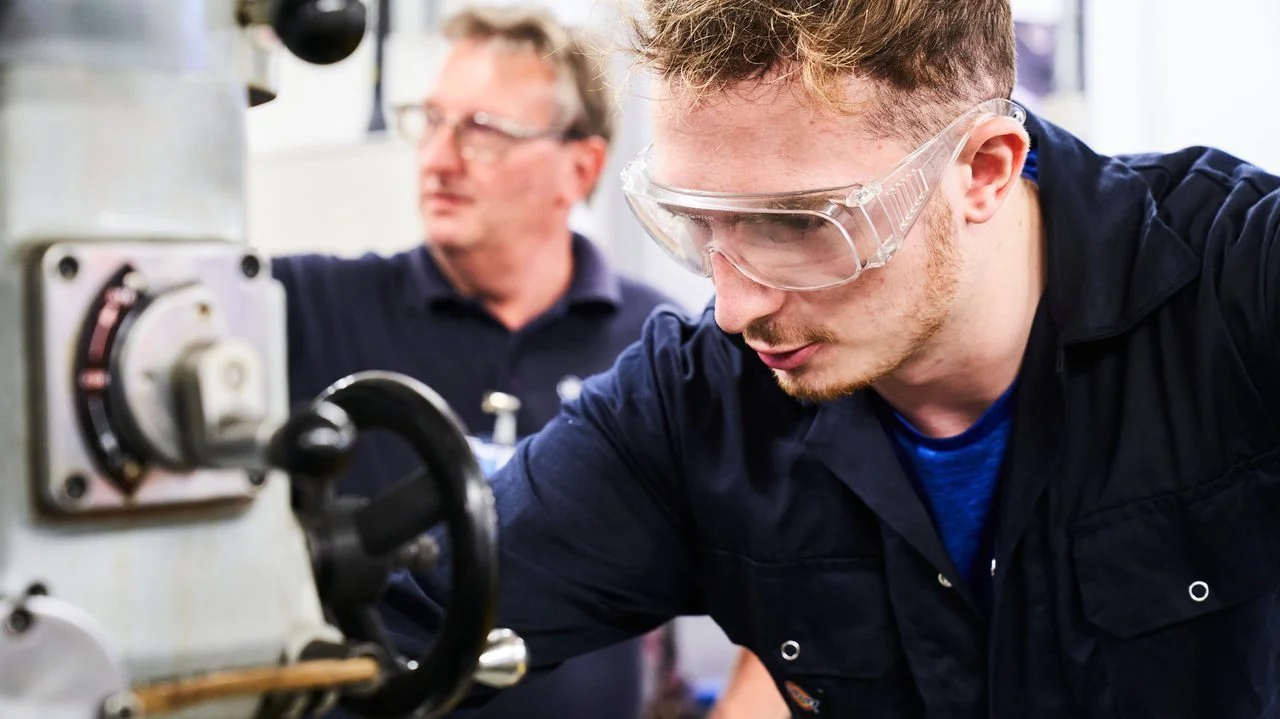
Gain practical experience with a strong focus on technical skills, safety and real world engineering.

Industry expert coaches

Learn in our training centre

Individual coaching and mentoring sessions
Discover how we're achieving success


Industry expertise


Frequently asked questions
Engineering apprenticeships typically take longer than apprenticeships in many other sectors because of the technical skills and practical experience required. Total People’s Level 3 engineering apprenticeships take 39 months in total, including 36 months of practical training followed by a three-month end-point assessment gateway. The Level 4 Manufacturing Engineering Technician apprenticeship takes 45 months. These longer programmes allow apprentices to develop the technical competence and practical experience needed to work safely and independently in an engineering environment.
You do not necessarily need existing qualifications in maths or science to start an engineering apprenticeship. However, apprentices may need to achieve Level 2 English and maths as part of their programme, depending on their age and existing qualifications.
For apprentices aged 16 to 18, this generally means achieving Level 2 English and maths unless they already hold an equivalent qualification. For apprentices aged 19 and over who do not already have the required qualifications, English and maths training may also be funded where the relevant requirements are met and the employer agrees. However, those who are 19 and over may be exempt from getting these qualifications if not needed by the employer.
Your learning coach can help identify any additional support you need and incorporate it into your apprenticeship programme.
The Level 3 Engineering and Maintenance Technician apprenticeship focuses on developing practical engineering skills, including the maintenance, installation and repair of plant and equipment.
The Level 4 Manufacturing Engineering Technician provides more advanced technical training. Alongside work-based learning, apprentices spend one day a week at UCEN Manchester’s Openshaw campus working towards an HNC. The programme covers areas such as manufacturing processes, quality systems and computer-aided design (CAD).
Yes. Apprenticeships can support experienced technicians who want to progress into supervisory, leadership or senior technical positions.
The Level 4 Lead Manufacturing Engineering Technician is designed for technicians who are moving towards greater responsibility within an engineering environment. The programme runs for 36 months, followed by a six-month gateway, and develops leadership and coordination skills alongside HNC-level study. It allows experienced technicians to build on their existing technical knowledge rather than starting their engineering training again from the beginning.
Apprentices must complete a minimum of six hours of off-the-job training each week, or the equivalent amount of training spread across the practical training period, subject to the applicable funding rules.
This training is protected time for structured learning and development away from the apprentice’s normal day-to-day duties. It can include activities such as practical training, classroom learning, studying, completing assignments or developing knowledge and skills linked to the apprenticeship standard.
Yes. The Bus and Coach Engineering Technician apprenticeship is a specialist engineering and automotive pathway for employees working with buses and coaches.
While employers may typically look for a broader engineering or automotive apprenticeship, this programme applies those skills specifically to the maintenance and repair of bus and coach systems, including mechanical and electrical components. This makes it particularly relevant for employers looking to develop specialist vehicle engineering skills within their workforce.
The apprenticeship runs for 36 months, followed by a three-month end-point assessment gateway. Apprentices must also achieve the required Level 2 English and maths before completing the programme, unless they already hold equivalent qualifications.
The minimum wage for apprentices is £8.00 per hour from April 2026. This rate applies to apprentices under 19 and apprentices aged 19 or over who are in the first year of their apprenticeship.
Once an apprentice aged 19 or over completes their first year, they are entitled to the National Minimum Wage rate for their age rather than the apprentice rate. Employers can choose to pay more than the legal minimum, and many do so depending on the role, location, sector and level of experience.
For non-levy employers, the government currently fully funds apprenticeship training for apprentices aged 16 to 21. From 1 August 2026, this full funding will also apply to apprentices aged 22 to 24. For apprentices aged 25 and over, the government funds 95% of the training costs, with the employer contributing the remaining 5%.
Employers remain responsible for the apprentice’s wages, National Insurance and pension contributions. You can find further information on our employer apprenticeship funding page.
Yes. Apprentices under 18 require appropriate supervision when working with machinery, equipment or other potentially hazardous environments. The Health and Safety Executive (HSE) explains that young workers can be at greater risk of injury, particularly during their first six months in a role.
Employers must provide young workers with suitable instruction, training and supervision to help them work safely and avoid putting themselves or others at risk. The level of supervision should reflect the apprentice’s age, experience and the risks associated with their role, rather than simply their confidence or ability.
Are you an individual?
Become an apprentice
If you're an individual interested in starting an apprenticeship, take a look at our current vacancies.
Are you a business?
Contact us today or give us a call
03333 222 666Get in touch
Please complete this form and we'll get back to you.